Home | Newsletter | Calendar | Contact Wheels | History | Pictures | News | Membership

Beautiful Barrio


Dan Mayfield/Tribune
03/02/01

The barrio is hip again.

The Barelas neighborhood has seen more development in the past two years than it has in the previous 50. The infusion of interest, area business owners say, is changing the neighborhood into a prettier, safer and more exciting community to live and work in.

"Everybody's, like, fixed up their buildings. Everybody's pitching in. Everything that's being upgraded is great," says Eric Perez Jr., manager of Cristy Records on Fourth Street Southwest.

"I like the way Barelas is looking now," says his mother Marcella Perez, co-owner of the 40-year-old Cristy, which specializes in Spanish, country and oldies music.

The area has gotten a lot of attention since The National Hispanic Cultural Center of New Mexico opened last year. Now, the Barelas Job Opportunity Center and offices of the Albuquerque Hispano Chamber of Commerce are set to open in the same building next month.

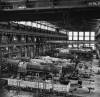
On the horizon is the Wheels Museum in the old rail yard to the east of Barelas. And last week, Albuquerque Mayor Jim Baca announced a plan to build a baseball stadium a few blocks north of the neighborhood, near the new Alvarado Transportation Center in Downtown.

"Look what's happening down here. I think it's changing dramatically for the better," says Loretta Armenta, president of the Hispano Chamber. "What it creates is an environment that's colorful and educational. I see a lot of people excited."

Roberto Rodriguez Jr., owner of Frontier Truck & Auto Repair, a three-garage auto repair business, says he's proud to operate the business here with his brother JosÇ. His family has had three similar places around the city, but the Barelas location is his favorite.

"It's a city within a city. No, it's a city beyond a city," he says.

Margy Hernandez, co-owner of the city's oldest tortilla factory, La Mexicana Tortilla Co. across the street from the cultural center, says, "The best thing is that this is a small town located in the middle of a big city. The business owners feel like it's a privilege to be down here. We feel special."

Many of the businesses are special.

Have you ever been at your mother or grandmother's house when beans are in the crockpot and chile is warming on the stove next to some ground beef? The grease and steam mix through the house and sting your nose a little, but it's the unmistakable smell of a good dinner.

That's the smell in Juanita's Comida Mexicana, El Taco Riendo or the Barelas Coffee House.

When was the last time you went to a supermarket that smelled like fresh food and the service was good? La Mexicana Tortilla Co. holds the aroma of fresh pastries being made in the factory behind the market. The women who work there can tell you, in Spanish or English, how to prepare masa for your tamales.

What about a handmade mattress? Really. The Albuquerque Mattress Co. makes and sells mattresses out of a one-room storefront in Barelas.

It's easy to walk up and down Fourth Street Southwest and have a great time visiting shops and cafes. Maybe you'll get lucky and run into some local politicos, like former House Speaker Raymond Sanchez, City Councilor Adele Baca-Hundley or Bernalillo County Commission Chairman Steve Gallegos. They all frequent the area's eateries, like the Red Ball Café, or the Barelas Coffee House.

"I love the Red Ball," Baca-Hundley says.

Railroad days

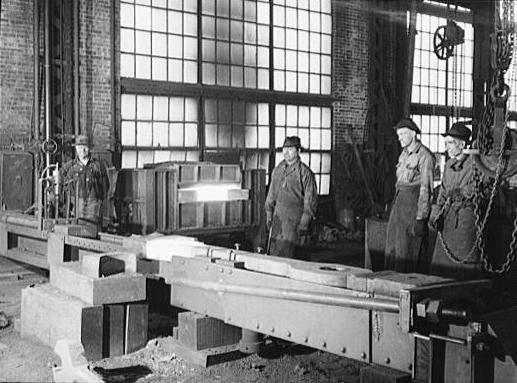
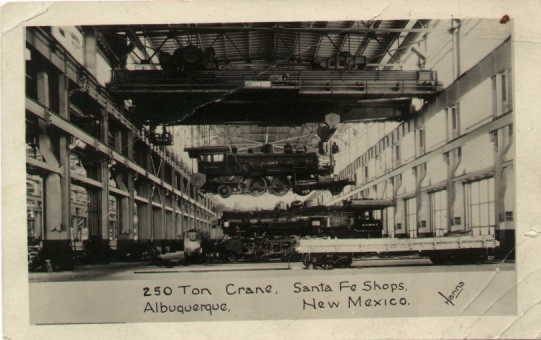
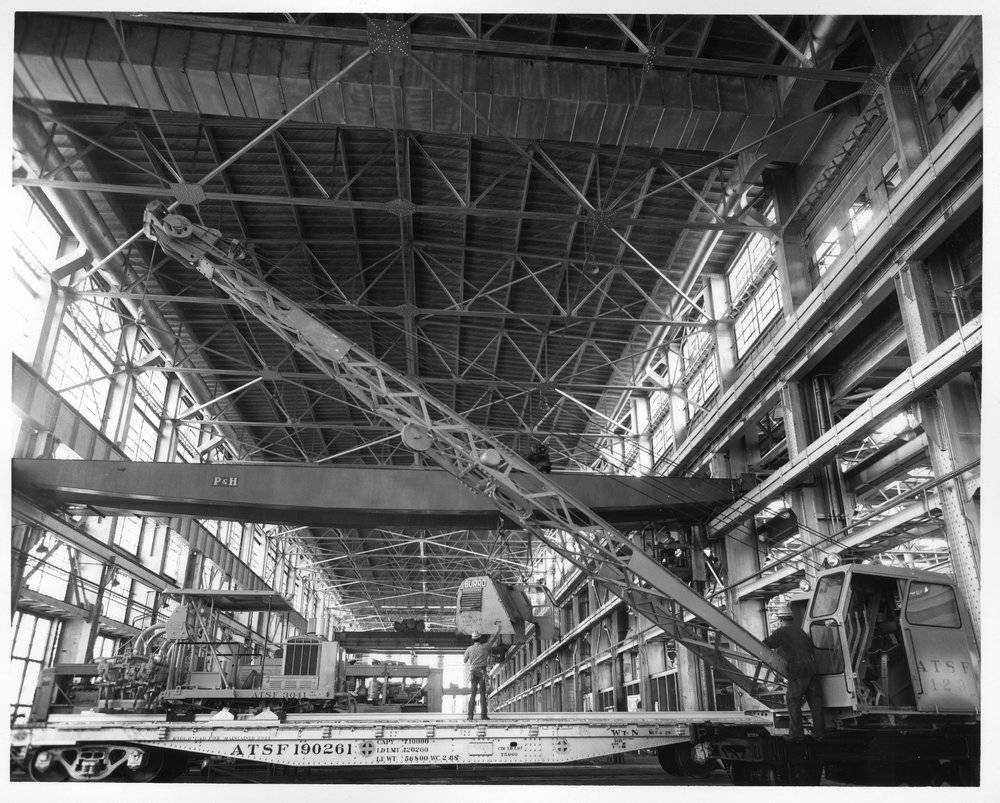
Barelas's businesses have always been at the community's core. Barelas is the oldest neighborhood in Albuquerque, older even than Old Town. By the 1930s, the Atchison Topeka & Santa Fe Railroad had built a 145,000-square-foot roundhouse for repairing trains, and the area bustled with activity night and day.

The Red Ball CafÇ and others were open 24 hours a day, catering to railroad workers. Fourth Street Southwest had restaurants and nightclubs, and a thriving Downtown was just down the street.

"It was the mecca for people," Armenta says.

But by the 1950s, when a sewage treatment plant was built in the area and the smell drove many away, Barelas was in decline. Residents say misguided urban renewal attempts in the 1960s and '70s, coupled with the rail yard closing in the early 1970s, hurt the area economically.

When Civic Plaza was built, it disrupted the traffic flow into the area, splitting north and south Fourth Street.

But being sealed off and nearly forgotten may be Barelas's saving grace. It preserved those historic buildings, quaint shops, whitewashed buildings, small markets with neon signs and art-deco architecture the community is now known for, residents say.

Waiting for the boom

The development in the area is all part of a plan the city of Albuquerque has had for the past 10 years, Baca-Hundley says.

In 1995, Barelas received about $1.2 million in federal, state and city improvement funds. The money was used to build a park at the corner of Fourth Street and Barelas Road. The city also built pillars with colorful tiles that pay homage to the area's businesses and community leaders at bus stops along Fourth Street.

With the face-lift and the cultural center opening, business people along Fourth Street Southwest were expecting a boost in business. One survey showed the cultural center would attract between 500,000 and 600,000 tourists annually by its third year. Nearly 30 percent of those visitors would come from out of state, the survey said.

But so far, businesses haven't seen the increase.

"I'm waiting," says Hernandez of La Mexicana.

On the opening day of the center, La Mexicana saw an increase in its business, but not much since, she says.

"We've been here a long time, and we've been successful without depending on tourists," Hernandez says.

Other businesses that rely on foot traffic were hoping for more people, too.

Martin Peña's Barber Shop has been on Fourth Street for 20 years, and he says he had hoped for more stragglers to wander in for his two-line (a trim on top and shave in the back) haircut.

"What's the difference between my two-line and somebody else's haircut? About $20," he says. A trim at Peña's is $7.50.

"I see tourists all the time, but they just come in and ask directions," he says.

The parade held when the cultural center opened last fall didn't do much for some businesses.

"The day they had the parade, they (visitors) just walked on by," says Lillian Martinez, who owns Albuquerque Mattress with her husband, Richard. "I think it's really nice. But I don't think we're getting any new customers. It hasn't happened."

Albuquerque Mattress is stuffed in a small one-room storefront with a handful of mattresses for sale. The back half of the store has sewing machines and rolls of fabric that Richard uses to make mattresses by hand. He has worked in the shop since the 1950s stitching mattresses and building box springs.

"I started here when I was a kid," he says. Now, he works with his son, hammering box springs and sewing mattresses.

Julian Muñoz, son of Juanita Muñoz, who owns Juanita's Comida Mexicana, says business has been the same or a little slower since the center opened.

"The parade ended up being a bust. We closed because it was even slower than usual," Julian says. "We noticed a lot of people hung around, but they didn't come in."

At Astro Auto Glass, located in a whitewashed art-deco storefront south of Juanita's, the owners are a little more optimistic.

"I think it's really going to help once that chamber comes in," says Arturo Martinez, co-owner of Astro.

The company installs replacement auto glass.

Martinez says people visiting the cultural center use Bridge Boulevard to get to the center, not Fourth Street. Once the Barelas Job Opportunity Center opens on Fourth, he anticipates more traffic in front of Astro.

Urban issues

Some owners say slow business growth is due to homeless people loitering in the area, coupled with crime, which gives the public a bad impression.

"They (homeless) want to come in here and use the restrooms and stuff. Move them to different parts of town," says James Chavez, owner of the renovated Red Ball CafÇ. He bought the cafÇ from the city in 1997 and re-opened it in 1998.

"The only bad thing about the neighborhood is the homeless people," Muñoz says. He says some of the customers at Juanita's have been hassled.

Margarette Martinez, co-owner of Astro, says she would support moving the homeless shelters from Second Street. She says the panhandlers scare people away.

"That's become the stereotype of Downtown," she says.

Baca-Hundley has proposed plans to move the shelters or create one giant shelter. She plans to ask the city to install portable restrooms in the area.

She says a traffic study shows putting speed humps on Eighth Street will move more traffic back to Fourth Street. Third Street will change into a two-way street as well.

Not Nob Hill

Business are excited about the transformation in Barelas, but they're proceeding carefully. Their plan isn't to turn Barelas into another Nob Hill or Canyon Road -- it's simply to improve the neighborhood.

"Any time you go through gentrification you want to be careful," Armenta says. "I think gentrification can certainly have its positives and great impact, but if you're not careful it can cause displacement." Armenta is referring to what happened in Old Town and in many parts of Santa Fe.

Margy Hernandez says: "I think you have to be very careful because if it's driven by people that aren't from here, it could be bad. We have a lot of senior citizens in the area that we value. If property taxes went up, they could be moved away."

Barelas resident Andres Bazan, waiting for a haircut at Martin Peña's, says he's optimistic.

"They might do stuff to the neighborhood people ain't going to like. But, it's good that we have stuff down here now. Otherwise you have to go to the Heights. Now, everybody has to come to our neighborhood."